Posts

Showing posts with the label Science

The Seeds of Antibiotic Resistance Have Been Discovered in Tuberculosis Bacteria

Image
New genes associated with antibiotic resistance have been discovered after a thorough analysis of thousands of strains of tuberculosis bacteria. These findings could be extremely important for the treatment and prevention of tuberculosis in the future as well as the fight against drug-resistant bacteria. Currently, tuberculosis (TB) may be avoided with a vaccination and, in the majority of instances, treated with pharmacological treatments over the course of six months. However, it continues to kill around 1.5 million people year throughout the world, and we don't want that figure to increase. This is why the latest research, which represents the biggest genome sequencing study of Mycobacterium TB to date, is so important. The risk of a TB strain that is resistant to treatment won't go away any time soon. In one of their published publications, the researchers state that "this analysis indicates the possibility of extremely large-scale investigations to greatly expand our ...
Plants Have Been Keeping a Secret From Us About How Thirsty They Actually Are

Image
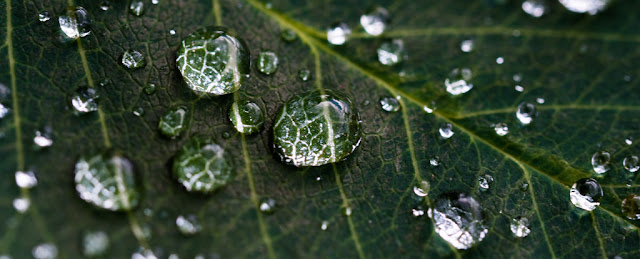
Have you ever wondered why plants require water or how much water they actually need to grow? Plants require up to 300 grams of water to produce every gram of dry plant matter because they lose a lot of water when they absorb carbon dioxide from the environment. However, things don't have to be that way. In a recent research published in Nature Plants, we describe a natural trick that, in the long run, may be exploited to encourage plant growth while utilizing less water. a component that is necessary for plant development About 80% of the weight of plants is composed of water. Therefore, it stands to reason that plants would require around four grams of water for every gram of dry mass in order to hydrate themselves to their optimal levels. It might be the case, however they require much more water to flourish. A plant requires around 300 grams of water to create one gram of new dry mass. Why is there such a big discrepancy between how much water is needed for development and how ...

Newly Discovered Molecule Fights Off Over 300 Kinds of Drug-Resistant Bacteria

Image
Scientists and health groups are working to find solutions to the serious issue of antibiotic resistance. The development of a novel chemical that may successfully manage germs that have developed antibiotic resistance may result in assistance soon. The drug is known as fabimycin, and in the future it may be used to treat some of the most difficult illnesses that people can contract. The new prospective medication specifically targets gram-negative bacteria, a class of virulent pathogens that frequently cause infections of the bloodstream, lungs, and urinary tract. Due to a shielding outer membrane that helps protect the wall from harmful compounds like antibiotics, they are resilient. More than one-third of patients with blood infections caused by gram-negative bacteria in one study at an English hospital died within a year, highlighting the difficulties in controlling these hardy organisms. In their recently published study, the researchers state that "genomic investigations and...

Giant voids of nothingness may be flinging the universe apart

Image
The pressure from enormous gaps of emptiness, which may be tearing the cosmos apart, may be the source of dark energy. According to recent study, the vast deserts of nearly nothingness that make up the majority of the cosmos may be accelerating the expansion of the universe. This implies that the enigmatic force thought to be tearing the cosmos apart, dark energy, might be explained by these huge expanses of emptiness. Greetings from the desert When you zoom out as far as the solar system and the Milky Way galaxy, the cosmic web, the biggest pattern in nature, becomes visible. Astronomers witness long, thin strands of galaxies called filaments, dense groupings called clusters, and between them all large expanses of practically absolute nothingness at these scales, where entire galaxies appear as small spots of brightness. The greatest of these arid regions, known as the enormous cosmic voids, may measure more than 160 million light-years in width. The smallest of these arid regions is ...

It Really Is in Your Head: Thinking Hard and Long Can Cause Brain Drain

Image
Wallace D. Wattles, an American author from the 19th century, reportedly remarked that "Thinking is the toughest and most demanding of all labor." On the surface, it would seem like a problematic comparison, but according to a recent research, thinking too hard or for too long can actually exhaust your brain, just like working out can. Hard physical work is undoubtedly exhausting, but a person's perspiration or trembling muscles reveal nothing about how hard they may be thinking. We just have to take people at their word when they claim they're psychologically worn out. As a result, researchers are still puzzled as to why sustained contemplation leads to cognitive weariness. It isn't really a feeling of being sleepy; rather, it is the impression that tasks are becoming more difficult to finish or to concentrate on. The brain's most prevalent excitatory neurotransmitter, according to some studies, may be to responsible for this lack of mental stamina. Despite b...

A Nuclear War Could Starve Billions, But One Country May Be Safer Than The Rest

Image
It all begins with a lone mushroom-shaped cloud that everyone had prayed would never appear again. Tit-for-tat attacks are sparked by retaliation, each of which aims to put an end to this most recent War of All Wars, until, around a week later, Earth starts to tremble under a veil of smoke and dust. Scenarios that map and estimate the destruction caused by a nuclear winter have existed since the Cold War dominated the evening news. Years later, we have a far better understanding of the more subtle consequences of airborne particles on our crops. And the numbers are still depressing. Six scenarios have been put up by a group of scientists from across the world using the most recent information on crop yields and fishery resources to approximate what food supplies may look like following a quickly intensifying nuclear battle between warring states. The death rate from a caloric scarcity problem alone might exterminate the majority of the world's population, leaving aside the immediat...

Simply Looking at Food Triggers an Inflammatory Response in the Brain

Image
The mere sight of food causes the brain to become inflamed. The mere sight and smell of a meal cause the production of insulin even before the carbohydrates themselves enter the body. For the first time, researchers from the University of Basel and University Hospital Basel have shown that the insulin release under these conditions is reliant on a momentary inflammatory response. However, this inflammatory reaction is so strong in obese people that it can actually reduce their ability to make insulin. The mouth-wetting response is likely the most well-known way that the body responds to eating. However, the hormone insulin, which regulates blood sugar, arrives on the scene even before we eat a bite of food. This stage is known as the cephalic (or neurally mediated) phase of insulin secretion. Meal enhances immune response It was unknown how the sensory experience of a meal caused the pancreas to release more insulin until this study. Researchers from the University of Basel and Univers...

Scientists uncover ancient source of oxygen that could have fueled life on early Earth

Image
Most likely, this oxygen source existed before photosynthesis. The planet's crust was torn open by violent earthquakes that rocked Earth some 3.8 billion years ago, allowing chemical reactions to take place deep under the shattered rock. According to a recent research, these reactions, which were fuelled by seismic activity, water, and almost boiling temperatures, may have given oxygen to some of the first living forms on Earth. According to the research, which was released on Monday (August 8), in the journal Nature Communications, this oxygen would have been packed in the chemical combination hydrogen peroxide (H2O2), which has two hydrogen atoms and two oxygen atoms bonded together (opens in new tab). Although hydrogen peroxide is perhaps best known for its antiseptic properties, it can still be a useful source of oxygen once it is broken down by enzymes or reactions that take place under high heat, according to Jon Telling, senior author of the study and senior lecturer in geoc...

'Gigantic jet' that shot into space may be the most powerful lightning bolt ever detected

Image
The rarest and most powerful lightning strike ever recorded occurred over Oklahoma. The rain picks up in intensity, the sky darkens, and lightning crackles across the atmosphere. However, this lightning bolt does something unexpectedly: it doesn't strike down toward the ground or go sideways through clouds. It shoots straight up, 50 miles (80 kilometers) into the air, brushing the bottom border of space as it leaves the top of the cloud. Bolts like this are known as enormous jets. Scientists have just discovered the most potent enormous jet ever. These uncommon and intense lightning strikes only happen as few as 1,000 times a year and produce more than 50 times as much energy as a conventional lightning bolt. Researchers examined a huge jet that emerged from a cloud above Oklahoma in 2018 for a study that was published on August 3 in the journal Science Advances(opens in new tab). The team discovered that the bolt moved about 300 coulombs of energy, or about 60 times the 5-coulomb ...

Psychologists Find That a 3-Minute Online Art Viewing Can Significantly Improve Your Well-Being

Image
Similar results are obtained by being in nature or even visiting real art galleries. A person's emotions, stress levels, and general wellbeing can be significantly affected by visits to art galleries and museums. But does this also hold true for seeing art online? Recent research by psychologists Matthew Pelowski and MacKenzie Trupp looked into this issue. They reached the following judgment: Additionally, a simple three-minute visit to an online cultural or artistic exposition significantly improves subjective well-being. During the initial Covid 19 outbreak, arts and cultural organizations quickly migrated from fixed structures to the Internet. For the first time, the general public became interested in digital museums and online art galleries. The effect of this was two things. First, individuals could access cultural objects and works of art from the comfort of their sofas. Second, art was now accessible to a far wider audience than before. Over the last 10 years, experts have ...

Why this cinematic sound trick makes your brain tingle and your skin crawl

Image
WE'VE ALL FELT the sense of dread that comes with tension in a movie or television scene. A change is imminent. Even if we're unsure of what is tipping us off, our brains are aware of it. In these situations, sound designers—audio professionals who use tried-and-true strategies to keep us on the edge of our seats—often control our emotional cues. The Shepard tone is one of their most popular methods for making us feel anxious. Invoked when sounds that resemble the pitch of a scale seem to continuously ascend or descend, getting ever higher or lower, this classic auditory illusion's signature psychoacoustic effect is known as the Roger Shepard effect, after cognitive scientist Roger Shepard, who pioneered graphical visualizations of complex statistical data. Film sound designers and composers frequently use this method to evoke a dramatic and menacing atmosphere, most notably Hans Zimmer for Christopher Nolan movies like Inception and Interstellar. According to Andrew King, ...

Thousands of Different Scents – Scientists Solve a 30-Year-Old Mystery

Image
It has been shown that worms can discriminate between various scents thanks to a chemical process. The capacity to smell or not to smell might be the difference between life and death for soil-dwelling nematodes that rely largely on olfaction for survival. But for decades, researchers have been perplexed by how these worms can identify between more than a thousand different fragrances. It has been shown that worms can discriminate between various scents thanks to a chemical process. The capacity to smell or not to smell might be the difference between life and death for soil-dwelling nematodes that rely largely on olfaction for survival. But for decades, researchers have been perplexed by how these worms can identify between more than a thousand different fragrances. The journal Proceedings of the National Academy of Sciences just published its findings. After defending his thesis last week, Daniel Merritt, a first co-author on the article and a recent Ph.D. graduate from the van der K...